





Some cities are synonymous with a specific form of transportation—cable cars and San Francisco go hand-in-hand, while Los Angeles is world-famous for its traffic-packed freeways.
When you think of New York City, trains like the subway almost always come to mind. The subway is how millions of New Yorkers commute to work and visitors get around. Don’t forget about the trains running to the outlying suburbs. Some even head into neighboring states.
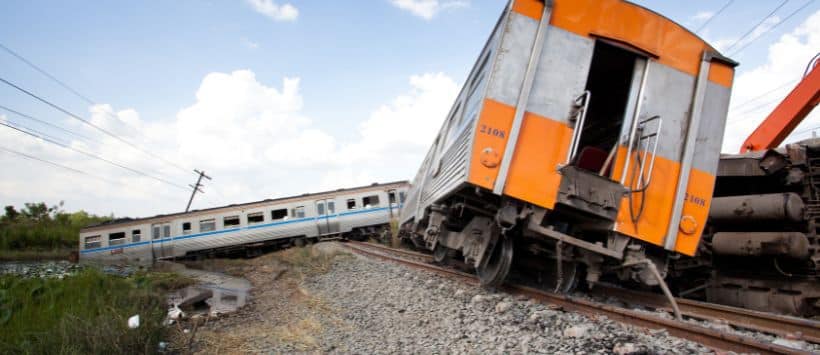
While trains are essential, accidents can happen. In fact, there are nearly 2,000 train accidents every year, and some of them occur right in New York. However, it’s important to note that compared to the number of vehicle crashes, train accidents are considered relatively rare.
However, if you’re involved in a train accident, do you know what to do afterward? A better question is, do you know how to minimize your chances of being in a train accident?
Staying Safe On New York Subways and Trains
The second-largest commuter rail system, the Metro-North, operates in NYC. The rail line even runs into parts of New Jersey and Connecticut. In other words, if you hop onto a commuter train in New York, it’s probably run and managed by Metro-North.
While Metro-North prides itself on its safety record, accidents still occasionally happen. Most of these accidents can be avoided if everyone takes a few safety precautions, and uses some common sense. You know it’s common sense to not walk on railroad tracks even when there isn’t a train in sight.
Here are some additional safety tips that can help you avoid being involved in a train accident:
- Always look for warning signals and signs before crossing railroad tracks. You also only want to cross at designated areas. Don’t try to reenact a scene from a favorite action movie. Not only is it dangerous, but crossing anywhere other than a designated area can cause significant damage to your vehicle. You’re also risking a hefty fine on top of vehicle repair expenses.
- Even if there isn’t a train in sight, always stop at the crossing. Trains can move deceptively fast, even when they’re out of view. Even when the warning lights aren’t flashing and the guardrail is up, it’s still a good idea to cross with caution. Slow down and check both directions before crossing the tracks.
- You’ve probably seen scenes in movies where the star beats a train. They make it safely across the tracks with a split second to spare. This is when the saying Don’t try this at home definitely applies. Not only is it illegal and extremely dangerous, but if an accident occurs you’re automatically the at-fault party.
- If your vehicle becomes stuck on the tracks, get out and move to a safe location. This isn’t a suggestion, it’s ensuring your safety even if a train isn’t also on the tracks. Call the emergency number listed on the crossing arms. If you can’t find the number, call 911. This way, any train operators in the area are warned there’s an obstacle on the track.
Subway Train Safety Tips
New York City relies on its subway system. While the subway is considered a safe form of transportation, you’re more likely to be involved in a car wreck, accidents can happen. Most subway accidents are due to human error or negligence. This is when you want to follow the rules and use common sense.
Don’t jump onto the subway tracks, even if you drop an item. Alert the station attendant. They have a crew that routinely clears the tracks. You can usually pick up your lost item the following day or so.
Just like trying to pull off movie stunts on railroad tracks and moving trains is never a good idea, the same applies to the subway. Don’t try your hand at subway surfing; the behavior is illegal and extremely dangerous.
Refrain from leaning over the tracks, subway trains typically come into the station at a relatively high rate of speed. You don’t want to be hit by a moving subway train, and you also want to avoid running on subway platforms. You’re placing yourself and others at risk of falling or being pushed onto the tracks.
Steps to Take After a Train or Subway Accident
If you’re involved in a train or subway accident, you’ll want to take similar steps as if it’s a vehicle collision. Assess your injuries and those of others, and seek immediate medical attention. You also want to alert the authorities that an incident occurred.
You also want to contact an experienced train and subway accident attorney. Determining liability in these types of accident cases is often complex. Determining liability is often complicated since more than one party is often responsible for the accident. Don’t forget that New York is also a pure comparative negligence state. This can further complicate your accident case.
If you’re not sure how pure comparative negligence can impact your case, the answer is fairly simple. Under pure comparative negligence guidelines, even if someone is 99% responsible for the accident, they can still recover 1% of their damages. For example, if you cross the train tracks while the warning lights are flashing, you may be wholly or partially at fault for the accident.
On the other hand, if the train fails to stop on time and collides with your vehicle, the operator and ownership company may share all or part of the blame.
Protect Your Legal Rights in a Train or Subway Accident Case
In New York, the principle of pure comparative negligence allows for the possibility of recovering damages even if you are found to be at fault, to some extent, in an accident.
This rule can apportion damages based on the degree of fault assigned to each party involved, meaning that even if you are predominantly at fault, you could still be entitled to compensation for a portion of your damages. Given the complexities of this legal framework and the intricacies involved in assigning degrees of fault, it’s essential for you to have knowledgeable legal guidance.
An accident attorney, well-versed in New York’s specific regulations, can provide indispensable assistance. They can help you navigate the legal intricacies, ensure accurate representation of your fault percentage, and advocate for the maximum compensation you are legally entitled to.